
Do We Need to Talk About Social Care in Sagamihara? [Podcast Episode]
It just does often seem like social care for people with disabilities and the elderly in Sagamihara City and Kanagawa Prefecture as a whole, seems to suck.
It just does often seem like social care for people with disabilities and the elderly in Sagamihara City and Kanagawa Prefecture as a whole, seems to suck.

Japan is increasingly adopting information technology to help those in need of assistance in times of disasters, such as the elderly and people with disabilities. Major electronics maker NEC Corp. and disaster management advisory firm Tokio Marine Resilience Co. conducted a test with the western Tokyo city of Tama late last month of a system to confirm the safety of those in need of support during disasters. Under the system, those who provide evacuation support receive requests on their smartphones for safety checks when local governments issue evacuation-related information.
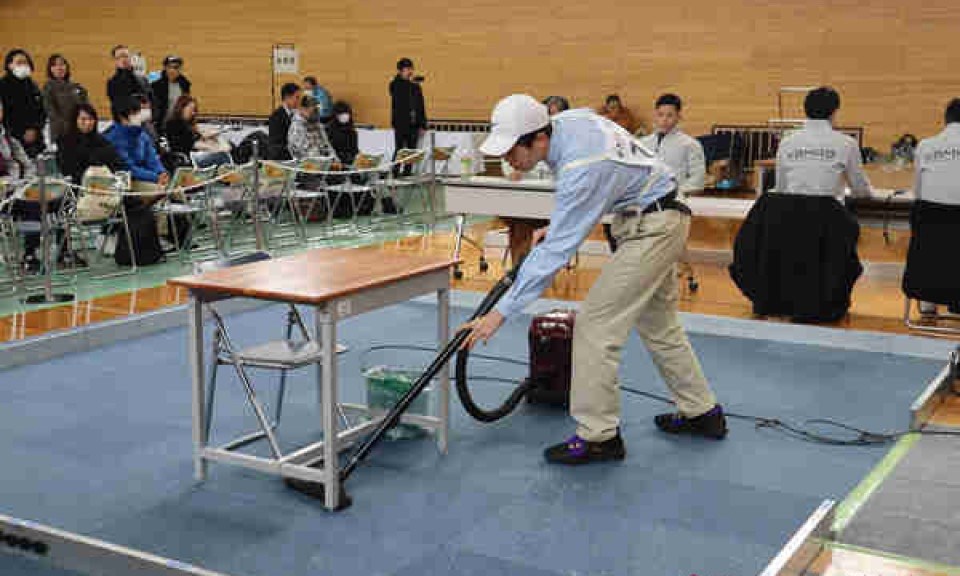
The “Kyoto Abilympics,” an event which enables people with disabilities in Kyoto Prefecture to demonstrate their vocational skills, was recently held at Kyoto prefectural technical college and Kyoto technical college for the disabled in Fushimi Ward. Approximately 70 participants, ranging from students at special needs schools to working adults, showcased their abilities in 12 different categories, highlighting their dedication and daily practice.
At the first hearing of the lay judge trial held at the Chiba District Court on February 17th, the defendant admitted to the charges, saying, “I did nothing wrong.” The defense responded by arguing that the father had reached his limit with caring for his son, and that the sentence should be considered in light of the circumstances leading up to the incident.
At the first hearing of the lay judge trial held at the Chiba District Court on the 17th, the defendant admitted to the charges, saying, “I did nothing wrong.” The defense responded by arguing that the father had reached his limit with caring for his son, and that the sentence should be considered in light of the circumstances leading up to the incident.

NHK E will begin airing a ‘welfare’ TV Programme on NHK E called ‘toi-toi’ from April 2025. On January 7th 2025, it was announced on the official website that NHK Educational TV’s barrier-free variety show “Baribara” (broadcast on Thursdays 8pm) would end in March 2025. However, it promised a replacement in the TV schedule. According to the NHK E Website ‘toi-toi’ is a “new welfare program where everyone thinks about the “question” that a person has had deep in their heart. The protagonist who posed the “question” explores the “question” while talking to people with diverse perspectives. We will search for clues to realize a world where we accept differences and live together.” ‘toi-toi’ will be broadcast on NHK E on Thursdays at 8PM.
NHK E will begin airing a ‘welfare’ TV Programme on NHK E called ‘toi-toi’ from April 2025. On January 7th 2025, it was announced on the official website that NHK Educational TV’s barrier-free variety show “Baribara” (broadcast on Thursdays 8pm) would end in March 2025. However, it promised a replacement in the TV schedule.

It has been revealed that a disability welfare service company with its headquarters in Shinjo City has indicated its intention to close its seven Type A continuous employment support offices in the prefecture at the end of March next year. According to the company, it plans to close seven Type A continuous employment support offices, where disabled people work under employment contracts, in Shinjo City, Murayama City, and other locations at the end of March next year, and lay off over 200 employees. The company explained the reason for closing the facilities as follows: “The Ministry of Health, Labor and Welfare has indicated its intention to abolish the annual income requirement for social insurance premiums. If this is abolished, we estimate that our annual burden will increase by approximately 68 million yen. It will be difficult to generate profits that correspond to this.”
It has been revealed that a disability welfare service company with its headquarters in Shinjo City has indicated its intention to close its seven Type A continuous employment support offices in the prefecture at the end of March next year. According to the company, it plans to close seven Type A continuous employment support offices, where disabled people work under employment contracts, in Shinjo City, Murayama City, and other locations at the end of March next year, and lay off over 200 employees.
The company explained the reason for closing the facilities as follows: “The Ministry of Health, Labor and Welfare has indicated its intention to abolish the annual income requirement for social insurance premiums. If this is abolished, we estimate that our annual burden will increase by approximately 68 million yen. It will be difficult to generate profits that correspond to this.”
Japan’s Health, Labor and Welfare Ministry this year started rolling out an online system to enable about 70 institutions with minimal experience in the processes behind organ donations from brain-dead patients to connect with core medical institutions that have abundant experience. The initiative seeks to help the inexperienced institutions with declaring patients as brain dead and is part of an effort to increase the number of organ donations in the country.

 Barrier Free Japan