Latest Posts

Barrier Free Japan Podcast Politics

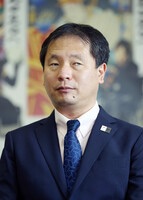
Japan’s PM Ishiba: “We must make it the norm to have spaces where people can interact with each other regardless of whether they have a disability” [Podcast Episode]

On May 30th, the Japanese government held the first event to deepen understanding of people with disabilities, “Tomotomo Festa 2025,” at the State Guest House in Motoakasaka, Tokyo. Prime Minister Ishiba Shigeru, who attended the opening ceremony, said, “We must make it the norm to have spaces where people can interact with each other regardless of whether they have a disability or not.”

Coronavirus COVID-19 Disability Elderly Japan

Japan Govt Loses Suit over “Abenomasks”

A district court on Thursday partially nullified the Japanese government’s decision not to disclose documents regarding the procurement of”Abenomasks,” cloth masks distributed in the early days of the COVID-19 pandemic. Atsushi Tokuchi, presiding judge at Osaka District Court, also ordered the state to pay 110,000 yen in damages to the plaintiff, Kobe Gakuin University professor Hiroshi Kamiwaki whom had filed a suit demanding the revocation of the government decision, saying that it was illegal not to disclose the documents containing detailed information about the state’s procurement contracts.

Alzheimer’s iPS Japan Medical

Japan Starts Final-Stage Trial for iPS Drug for Alzheimer’s

A Japanese team said on Tuesday 3rd June that it has started a final-stage clinical trial to administer to patients with familial Alzheimer’s disease a drug discovered through induced pluripotent stem, or iPS, cells. This is the first final-stage trial conducted in the field of iPS drug discovery, which uses iPS cells to discover new efficacies of new and existing drugs, according to the team. The team includes members of Kyoto University’s Center for iPS Cell Research and Application, or CiRA, and Towa Pharmaceutical Co., which makes and sells generic drugs.

Birth Rate Fertility Japan

Japan’s births in 2024 fall below 700,000 for 1st time

The number of births in Japan fell below 700,000 for the first time in 2024, declining 5.7 percent from the previous year to 686,061, government data showed Wednesday, highlighting a continued trend of delayed marriages and childbirths. Japan’s total fertility rate — the average number of children a woman is estimated to bear in her lifetime — also fell to a record-low 1.15, down from 1.20 in 2023, according to the Ministry of Health, Labor and Welfare. Both the number of births and the fertility rate have decreased for nine consecutive years. The pace of Japan’s declining birthrate is now 15 years ahead of government projections. The full-year figures exclude babies born to foreign nationals.

Care Children Disability Health Japan Welfare

Many Needy Pregnant, Nursing Women Burdened with Living Costs

Some 80 pct of needy pregnant and nursing women in Japan are struggling to secure funds to cover living expenses, according to a survey conducted by Save the Children Japan. By employment status, 49.2 pct were jobless, and 24.8 pct were part-timers. Asked about their financial conditions, 47.6 pct said they were barely making ends meet. Meanwhile, a majority stated that they were short of money, with 29.9 pct saying they are dipping into savings and 21.7 pct saying they are relying on borrowings.

Hospitals Japan Podcast Politics

LDP, Komeito, Nippon Ishin Agree to Reduce Hospital Beds [Podcast Episode]

Japan’s ruling Liberal Democratic Party-Komeito coalition and Nippon Ishin no Kai (Japan Innovation Party) agreed Thursday 29th May to remove up to 110,000 redundant hospital beds across the country, in an effort to reduce social security costs. The three parties will formalize the agreement soon, aiming to include the reduction in the government’s upcoming economic and fiscal policy guidelines, which will be adopted in June. Nippon Ishin estimates that reducing 110,000 hospital beds would save around 1 trillion yen in medical costs. “The three parties share the same recognition (about the effect of reducing hospital beds),” Ryohei Iwatani, secretary-general of the party, told reporters after meeting with officials from the LDP and Komeito earlier on the day.

Care Children developmental disabilities Disability Japan

“High quality therapeutic care is necessary!”: Kochi Parents of Children with Developmental Disabilities Concerned Over Facility Closure Plans

There is a growing possibility that the Hata Hope House Daycare Center “Tsukushinbo” in Sukumo City, which provides therapeutic care for children with developmental disabilities, will close at the end of this fiscal year, and parents in the Hata area are calling for reconsideration. According to the social welfare corporation “Tosa Hope House” (Nangoku City), which runs the facility, the reasons for the closure are the long-running deficit and the expected decrease in users. Parents have submitted 6,247 signatures to the corporation, citing the facility as “high quality therapeutic care and necessary for the community,” and calling for its continuation.

Japan Minamata Disease

Ceremony Marks 60 Yrs since Niigata Minamata Disease Recognition

A ceremony to mark the 60th anniversary of the official recognition of Niigata Minamata disease, a neurological disorder caused by polluted industrial wastewater containing methylmercury, took place in the city of Niigata, the capital of the namesake prefecture in central Japan. It was the first time in 10 years for an environment minister to attend the ceremony.

developmental disabilities Disability Japan Podcast Travel

Only 10% of Train Commuters with ‘Mental Disabilities’ in Japan Request ‘Reasonable Accommodation’ [Podcast Episode]

Half of people with mental disabilities or developmental disabilities in Japan have experienced problems using trains, but only 10% have requested reasonable accommodation from train staff, according to a survey conducted by the mental disability group Polke on May 2nd. The revised Act on the Elimination of Discrimination against Persons with Disabilities, which came into force in April 2024, requires private businesses, including trains, to provide reasonable accommodation, but the survey report pointed out that only 10% of people have requested reasonable accommodation, which is a “very serious problem.” It recommended that training for disabled people’s organizations and train staff to learn together needs to be improved.

Disability Japan Politics

Japan’s PM Ishiba: “We must make it the norm to have spaces where people can interact with each other regardless of whether they have a disability”

On May 30th, the government held the first event to deepen understanding of people with disabilities, “Tomotomo Festa 2025,” at the State Guest House in Motoakasaka, Tokyo. Prime Minister Ishiba Shigeru, who attended the opening ceremony, said, “We must make it the norm to have spaces where people can interact with each other regardless of whether they have a disability or not.”