Category: Employment

Autism Disability Discrimination Employment Japan Podcast

“We’d like you to resign”: Worker in Japan fired 4 days after revealing autism [Podcast Episode]

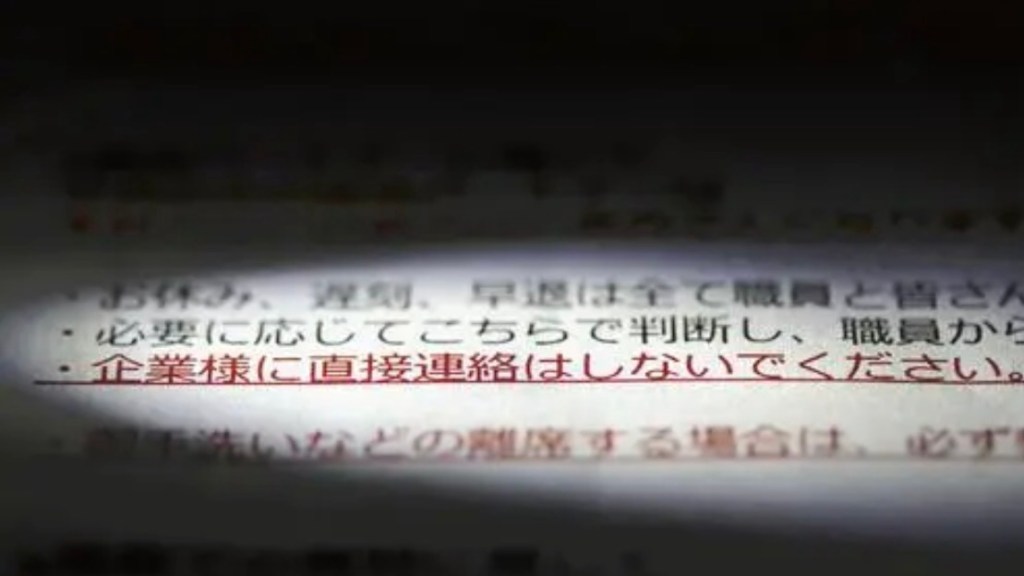
“We’d like you to resign.” Hearing those words, Yamakawa (a pseudonym) was shocked. They never expected such a drastic change in their employer’s attitude. The incident that came to mind had happened just four days earlier. Yamakawa had revealed to the head of the company, where they had been working for three years, that they had ASD.

Autism Disability Employment Japan

“We’d like you to resign”: Worker in Japan fired 4 days after revealing autism

“We’d like you to resign.” Hearing those words, Yamakawa (a pseudonym) was shocked. They never expected such a drastic change in their employer’s attitude. The incident that came to mind had happened just four days earlier. Yamakawa had revealed to the head of the company, where they had been working for three years, that they had ASD.

Care Children Disability Employment Japan

Japan begins day care system regardless of parental employment status

Japan began implementing a public system on Wednesday 1st April that allows children to attend day care for up to 10 hours per month, regardless of parental employment status, as part of a larger initiative to alleviate child care stress as the number of births continues to decline. Children will be cared for at authorized day care centers and kindergartens. Those with disabilities will also be accepted.

Disability Employment Japan Podcast Welfare

Wakayama Fails to Hire Statutory Number of People with Disabilities [Podcast Episode]

According to the announcement, as of June 1, 2024, three municipalities, Kinokawa, Shirahama, and Kushimoto, did not meet the statutory employment rate of 2.8% for persons with disabilities under the Act on Employment Promotion of Persons with Disabilities. As a result, they formulated employment plans for hiring persons with disabilities as required by the law. However, despite guidance from the bureau aimed at achieving the target, the situation had not improved by the deadline of the end of December 2025.

Disability Employment Japan

Wakayama Fails to Hire Statutory Number of People with Disabilities

According to the announcement, as of June 1, 2024, three municipalities – Kinokawa, Shirahama, and Kushimoto – did not meet the statutory employment rate of 2.8% for persons with disabilities under the Act on Employment Promotion of Persons with Disabilities. As a result, they formulated employment plans for hiring persons with disabilities as required by the law. However, despite guidance from the bureau aimed at achieving the target, the situation had not improved by the deadline of the end of December 2025.

Disability Employment Japan Podcast Welfare

Kitakyushu to Revoke Designation of Disability Support Facility Over Fraudulent Benefit Claims [Podcast Episode]

Kitakyushu City said it will revoke the designation of a Type B continuous employment support facility for people with disabilities in Yahatanishi Ward after its operator, based in Nakama, Fukuoka Prefecture, was found to have fraudulently claimed public support funds. According to the city, the company falsely reported that a full-time instructor was employed to improve participants’ wages in order to receive additional staffing payments between May and September last year, and also inflated attendance records for a user approved for services by another municipality, billing for more days than were actually attended. The revocation, under the Comprehensive Support for Persons with Disabilities Act, will take effect on March 31.

Disability Employment Japan Podcast

Japan Top Court Rules Work-Bar Provision Unconstitutional [Podcast Episode]

Japan’s Supreme Court ruled on Wednesday 18th February that a provision in the now-scrapped security services law that disqualified adult guardianship system users from employment violated the Constitution, which guarantees freedom of occupation and equality under law. The ruling, backed by 10 of the 15 justices, marked the 14th time since the end of World War II that the Supreme Court has declared a law or ordinance unconstitutional, and the first time since the Grand Bench ruling in July 2024 on the now-defunct eugenic protection law.