Author: Michael Gillan Peckitt

UK & CP born, living in Japan, blogging about disability
Abuse Business Japan Mental Health

Japan to mandate protective steps for firms against abusive customers

Japan’s Cabinet on Tuesday 11th March approved an amended bill requiring companies to adopt protective measures against overbearing or abusive behavior from business clients or the public. The bill mandates that firms establish clear rules against abuse and set up a system for victims to file complaints. The move follows a rise in workers quitting or suffering from mental illness due to “kasu-hara,” a Japanese slang term for customer harassment.

Disability Japan Medical

Japan’s Ishiba Admits Fault over Medical Expense Hike Plan

Japanese Prime Minister Shigeru Ishiba admitted his fault Thursday over the government’s unpopular plan to raise the limits on out-of-pocket expenses for high-cost medical care. 
   “It was a mistake,” Ishiba told a meeting of the Budget Committee of the House of Representatives, the lower chamber of the Diet, the country’s parliament.

Crime Disability Intellectual disabilities Japan Podcast

“Blaming Only the Defendant Would Be Too Harsh”: Chiba Father Given Suspended Sentence for Killing Disabled Son [Podcast Episode]

On March 12th, the Chiba District Court delivered a verdict in the trial of a 78-year-old man accused of murdering his younger son, who had a severe intellectual disability, by strangling him in July last year in Chosei Village, Chiba Prefecture. The court sentenced him to three years in prison, suspended for five years (the prosecution had sought a five-year prison term). Presiding Judge Ryuta Asaka noted that “the defendant was in a highly pressured situation, and it would be too harsh to place all the blame on him,” justifying the suspended sentence.

Crime Disability Intellectual disabilities Japan

“Blaming Only the Defendant Would Be Too Harsh”: Chiba Father Given Suspended Sentence for Killing Intellectually Disabled Son

On the 12th, the Chiba District Court delivered a verdict in the trial of a 78-year-old man accused of murdering his younger son, who had a severe intellectual disability, by strangling him in July last year in Chosei Village, Chiba Prefecture. The court sentenced him to three years in prison, suspended for five years (the prosecution had sought a five-year prison term). Presiding Judge Ryuta Asaka noted that “the defendant was in a highly pressured situation, and it would be too harsh to place all the blame on him,” justifying the suspended sentence.

Crime Japan Medical

Tokyo Doctor Ruled Not Guilty in Remanded Indecency Case

The Tokyo High Court on Wednesday found a 49-year-old doctor not guilty of licking a patient’s breast just after he operated on her at a Tokyo hospital in 2016. In the case sent back from the Supreme Court, Presiding Judge Hiroaki Saito upheld a district court ruling acquitting the doctor, Susumu Sekine, of indecent assault performed on an incapable person. “The possibility cannot be denied that the woman hallucinated,” the judge said, dismissing the prosecution’s appeal. Sekine was indicted for allegedly licking the left breast of the patient immediately after she underwent an operation to remove a tumor in her right breast at the hospital May 10, 2016.

Barrier Free Japan Podcast

Saou Ichikawa’s Akutagawa Prize-Winning Novel ‘Hunchback’ Now Translated into English [Podcast Episode]

Barrier Free Japan found a copy of ‘Hunchback’ by Saou Ichikawa in the Osaka Umeda branch of Kinokuniya. Looking forward to reading this. I would love to meet Saou Ichikawa. As people with disabilities we are not meant to use terms like ‘inspires’, but as a fellow person with disabilities, she ’inspires’ me to write fiction about having a disability in Japan – Ichikawa has congenital myopathy.

Disasters Earthquake Japan March 11

Some 27,600 Evacuees Remain 14 Years after Monster Quake

About 27,600 people still live as evacuees 14 years after a 9.0-magnitude earthquake and monster tsunami caused tremendous disasters, including a nuclear accident, mainly in the Tohoku region, northeastern Japan. As of Feb. 1, 27,615 afflicted people had yet to return home, the Reconstruction Agency said. The earthquake occurred off the coast of Miyagi Prefecture at 2:46 p.m. on March 11, 2011, measuring 7, the highest on the Japanese seismic intensity scale, in the prefecture while jolting the country almost entirely.

Bullet train Disability Japan Mental Health Shinkansen

All Tohoku Shinkansen services halted after person hit by train

All bullet train services on the Tohoku Shinkansen Line in northeast Japan were halted for around two hours on Monday after a person entered the tracks and was hit by a train, the operator said, days after the decoupling of cars on a train led to a disruption of services that still continues. JR East said a person intruded onto the tracks in the morning, with police suspecting that the individual climbed over a fence to commit suicide. While local train services in Japan are sometimes affected by suicides, shinkansen services are rarely halted.

Barrier Free Japan Podcast

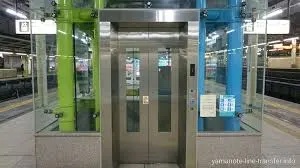
Police Investigate Elevator Management Company After Man Dies in Kobe Elevator Accident [Podcast Episode]

On the 27th of last month, Sho Tanaka, 31, a doctor, was found collapsed in a space on the first basement floor of an elevator in a commercial building in Chuo Ward, Kobe, and later died. Before Dr. Tanaka was found, a store employee saw the elevator’s fourth floor door open with no “cage” in place.