
日本で障害者の住宅・宿泊に根強い壁
日本では、障害のある人々が住宅や宿泊施設の利用において依然として大きな障壁に直面しており、最近の複数の事例が、差別の懸念や法的執行力の弱さ、不動産所有者やサービス提供者の理解不足を浮き彫りにしている。
日本では、障害のある人々が住宅や宿泊施設の利用において依然として大きな障壁に直面しており、最近の複数の事例が、差別の懸念や法的執行力の弱さ、不動産所有者やサービス提供者の理解不足を浮き彫りにしている。

People with disabilities in Japan continue to face significant barriers in securing housing and accommodation, with multiple recent cases highlighting concerns over discrimination, limited legal enforcement, and a lack of understanding among property owners and service providers.
People with disabilities in Japan continue to face significant barriers in securing housing and accommodation, with multiple recent cases highlighting concerns over discrimination, limited legal enforcement, and a lack of understanding among property owners and service providers.
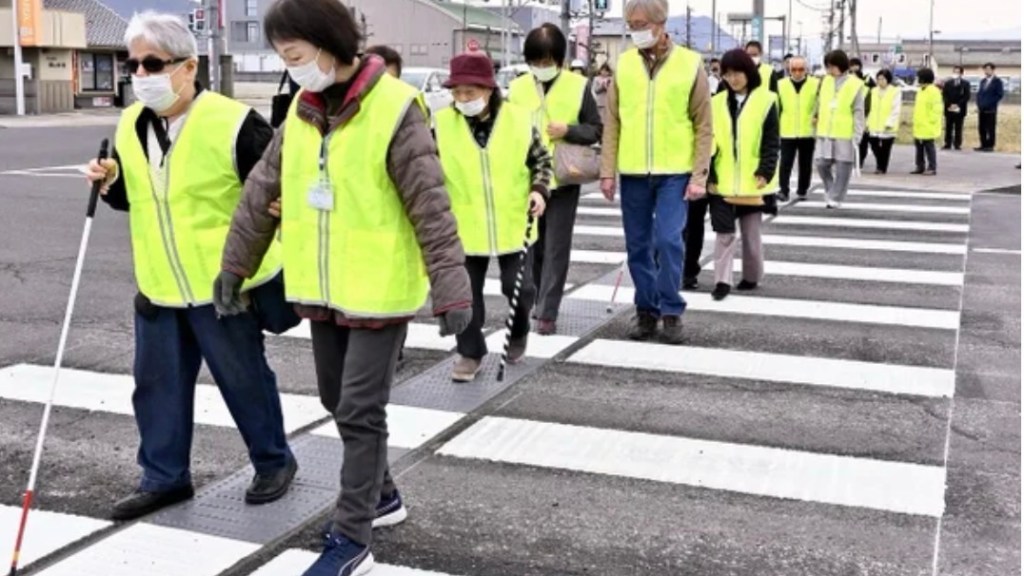
A pedestrian crossing built to a new standard with wider spacing between white lines than before was introduced this month at an intersection near JR Takase Station in Takase Town, Mitoyo City, the first such installation in Shikoku. On the 18th, the prefectural police invited visually impaired people and others to walk across it and share their feedback. In July 2024, related laws on road markings were partially revised, making it possible to widen the spacing between white lines from the previous 45–50 centimetres to as much as 90 centimetres. This is expected to reduce maintenance costs, as it can lessen deterioration caused by vehicle traffic.
In July 2024, related laws on road markings were partially revised, making it possible to widen the spacing between white lines from the previous 45–50 centimeters to as much as 90 centimeters. This is expected to reduce maintenance costs, as it can lessen deterioration caused by vehicle traffic.

The modifications to the arena, which dates back around 2,000 years, include ramps, protective railings and, after the games, an elevator. The work has been undertaken as part of some 20 million euros ($23 million) worth of improvements funded by the Italian government to enhance accessibility throughout Verona.
The modifications to the arena, which dates back around 2,000 years, include ramps, protective railings and, after the games, an elevator. The work has been undertaken as part of some 20 million euros ($23 million) worth of improvements funded by the Italian government to enhance accessibility throughout Verona.

As International Women’s Day on March 8 approaches, gender equality advocates in Japan are highlighting the need to break entrenched stereotypes in media and address the continued underrepresentation of women in politics.

Nagoya City held a meeting with disability groups and others regarding the wooden reconstruction of the main keep of Nagoya Castle. On February 11th the city held its first public briefing session since discriminatory remarks were made at a citizens’ debate in 2023. At the session, it reaffirmed its policy of proceeding with the wooden reconstruction plan by installing a small-scale lifting device. Nineteen groups, including disability organizations, took part in the meeting held on the 20th, where the city explained the basic principles of the plan.
Nagoya City held a meeting with disability groups and others regarding the wooden reconstruction of the main keep of Nagoya Castle.On the 11th, the city held its first public briefing session since discriminatory remarks were made at a citizens’ debate in 2023. At the session, it reaffirmed its policy of proceeding with the wooden reconstruction plan by installing a small-scale lifting device. Nineteen groups, including disability organizations, took part in the meeting held on the 20th, where the city explained the basic principles of the plan.

 Barrier Free Japan