
June 30 2026
TOKYO – The statutory employment quota (hōtei koyōritsu) requiring companies to employ a minimum proportion of people with disabilities will be raised from 2.5% to 2.7% on July 1. The aim is to further promote employment of people with disabilities. However, fewer than half of companies currently meet even the existing quota, highlighting ongoing challenges in creating suitable workplace environments.
Until now, companies with 40 or more employees were required to employ at least one person with a disability. Under the new quota, the threshold will be lowered to 37.5 employees per disabled worker (part-time employees are generally counted as 0.5 of a full-time employee), expanding the number of companies covered by the requirement.
Companies with more than 100 employees that fail to meet the statutory quota must pay a levy of ¥50,000 per month for each unfilled position.
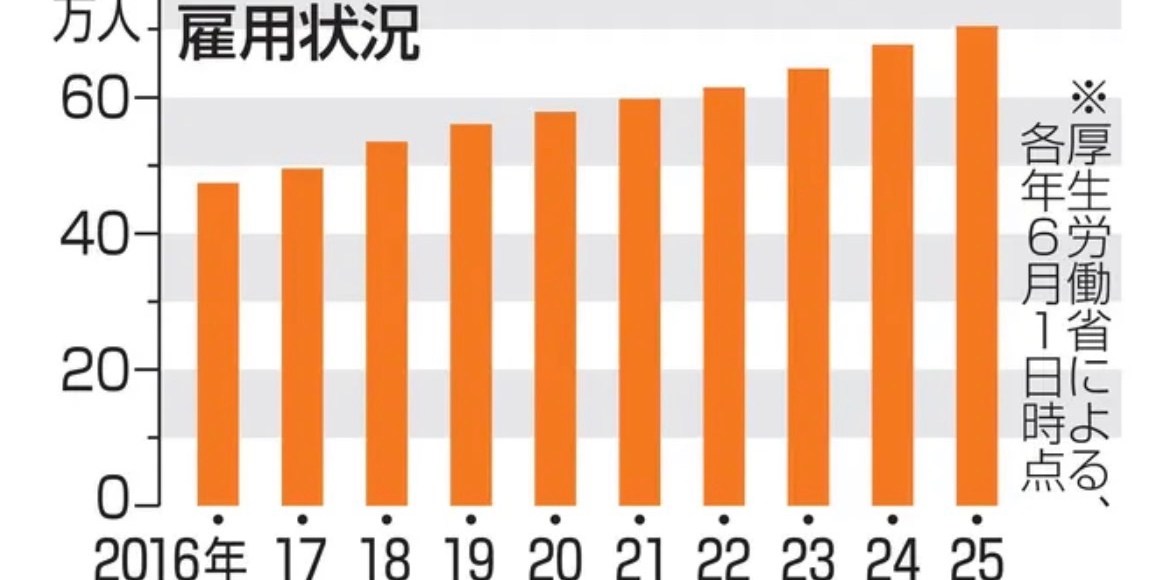
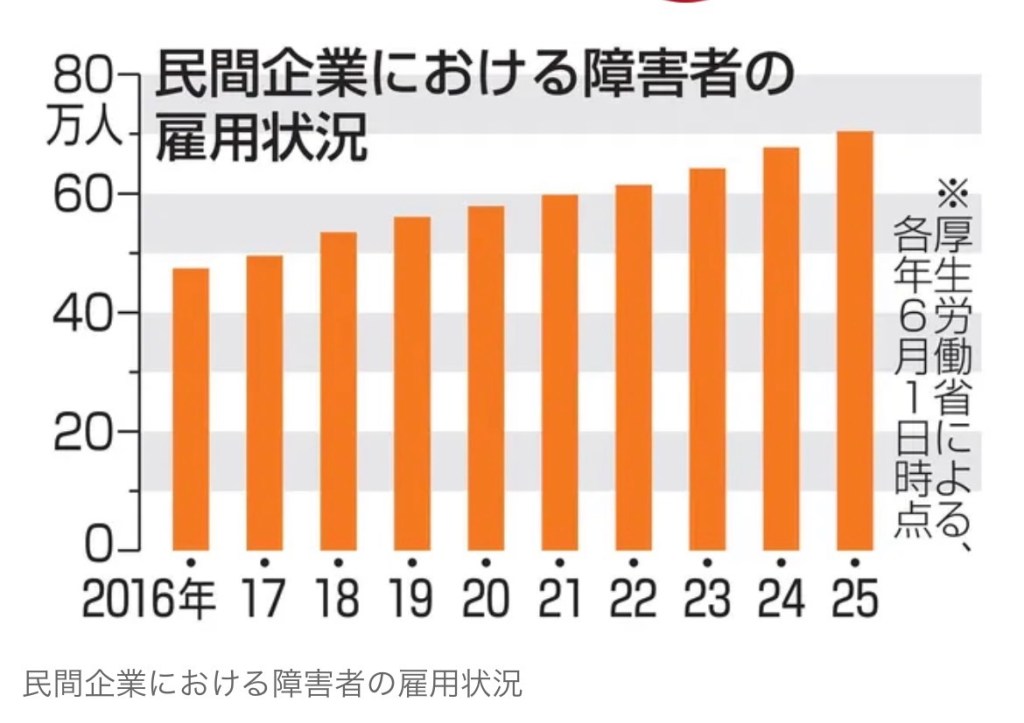
According to the Ministry of Health, Labour and Welfare, the number of people with disabilities employed by private companies exceeded 700,000 as of June 2025, the highest figure on record. By contrast, only 46% of companies had achieved the statutory employment quota.
An executive at a business organization expressed dissatisfaction with the increase, saying:
“Hiring people with disabilities also requires assigning employees to provide support. With more than half of companies still unable to meet the current quota, it is questionable to raise the standard.”


0 comments on “Less than half of Japan’s firms meet disability employment quota as statutory rate rises to 2.7%”