Category: Birth Rate

Birth Rate Elderly Japan

Japan’s Elderly Population Down at 36.19 Million

The estimated number of people aged 65 or older in Japan stands at 36.19 million as of Monday, falling by 50,000 from a year before, the internal affairs ministry said Sunday. The estimate, released ahead of Respect for the Aged Day on Monday, a national holiday, decreased for the first time in two years but accounted for record 29.4 pct of the country’s total population, up by 0.1 percentage point. According to the ministry, the decrease of the elderly population is attributed to factors such as the number of deaths among those aged 65 or over exceeding the number of people newly reaching 65.

Birth Rate Health Japan Medical Sex

Japan Panel OKs Nonprescription Sales of Morning-After Pill

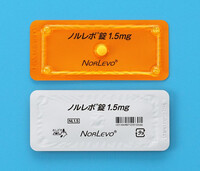
An expert panel of Japan’s health ministry has agreed that Aska Pharmaceutical Co. will be given approval to make and sell its emergency contraceptive pill Norlevo without a prescription. At a meeting Friday, the panel also agreed that the product will be classified as a drug that must be taken in the presence of a trained pharmacist for safety reasons. The panel decided not to set an age limit for access. But for individuals under 16, the age of consent to sexual acts, pharmacists would provide guidance as needed. Parental consent would no longer be required. Sales methods will be discussed at a later date.

Birth Rate Japan

Births Hit New Record Low for Jan.-June in Japan

The number of babies born in January-June fell 3.1 pct from a year earlier to 339,280 in Japan, hitting a new record low for the first half, the health ministry said Friday.  According to data released in June, the number of Japanese babies born in Japan in 2024 fell below 700,000 for the first time on record, standing at 686,061. The number for the whole of 2025 may rewrite the record low if births in the second half decrease at the same pace as the first half.

Birth Rate Children Disability Election Fertility Japan

Minor party head courts ageism controversy with childbirth comments

Sohei Kamiya, leader of the populist minor opposition Sanseito party, has courted controversy ahead of Japan’s House of Councillors election with his comment that “only young women can have children.” “Only young women can have children”, Sanseito leader, Kamiya said. “When I say that, some people call it discrimination. But it’s not. It’s reality. Men and, sorry to say, older women cannot have children,” Kamiya said during a stump speech in Tokyo on Thursday.

Birth Rate Fertility Japan

Japan’s births in 2024 fall below 700,000 for 1st time

The number of births in Japan fell below 700,000 for the first time in 2024, declining 5.7 percent from the previous year to 686,061, government data showed Wednesday, highlighting a continued trend of delayed marriages and childbirths. Japan’s total fertility rate — the average number of children a woman is estimated to bear in her lifetime — also fell to a record-low 1.15, down from 1.20 in 2023, according to the Ministry of Health, Labor and Welfare. Both the number of births and the fertility rate have decreased for nine consecutive years. The pace of Japan’s declining birthrate is now 15 years ahead of government projections. The full-year figures exclude babies born to foreign nationals.

Birth Rate Children Holidays Japan Podcast

Golden Week ‘Shogai Podcast Shorts’ 4: Greenery Day Observed [Podcast Episode]

The estimated number of children under 15 in Japan as of April 1 fell by 350,000 from a year before to 13.66 million, down for the 44th consecutive year, the internal affairs ministry said Sunday. The country’s child population hit the lowest level since comparable data became available in 1950. The ministry released the data a day before Children’s Day.

Birth Rate Children Health Japan

Half of Needy Households in Japan Unable to Buy Diapers

As many as 49.2 pct of needy households with infants have experienced an inability to buy disposable diapers due to economic reasons, according to a survey by international nongovernmental organization Save the Children Japan. 
   An inability to buy baby formula has been experienced by 39.6 pct.
   According to the survey, conducted online between June and August last year, 74.6 pct of respondents said they changed diapers less often when they couldn’t buy diapers, while an inability to buy powdered milk led 41.1 pct to feed babies with diluted formula and 27.9 pct to use less of it.