
By Barrier Free Japan
September 4th 2023
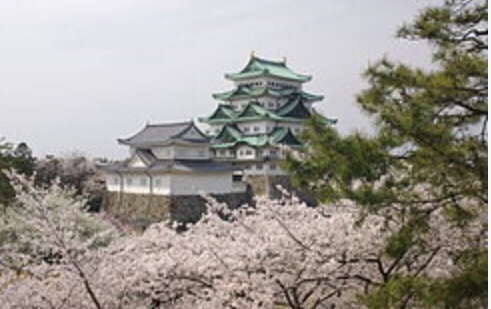
NAGOYA – I like Nagoya, I have been to Nagoya and as the adage goes, some of my best friends are from Nagoya. However, after reading recent news stories about Nagoya; it is difficult not to conclude that Nagoya ‘has issues’, as I believe the young folk like to say, when it comes to disabilities. As early as 2018 for example, there were concerns about Nagoya Castle possibly becoming inaccessible to people with disabilities. There are also more recent concerns about access to the subway. To begin outlining the concerns of people with disabilities about Nagoya, here is a brief timeline of the ‘Nagoya Castle Debacle’:
At a public debate held on June 3rd 2023 regarding barrier-free measures when restoring the wooden castle tower of Nagoya Castle, some participants said that an elevator that can go up to the top floor, which groups for the disabled and others are calling for, is unnecessary. Some were claiming that this was a discriminatory remark that made fun of people with disabilities.
Nagoya City, which hosted the debate, canceled the release of the video of the debate, saying it was an inappropriate remark.
Regarding this, Nagoya Mayor Takashi Kawamura said at a press conference that although he himself was at the venue, he could not catch all of the remarks, saying, “It is a place where citizens can speak freely, but it does not mean that they can say anything, so I think I should have said, “Please be careful.” Mayor Kawamura apologized, saying that he should have called attention to it when speaking.
The restoration of Nagoya Castle has been debated since May 2018 when a proposal that the castle be rebuilt without an elevator – or other ‘accommodations’ for people with disabilities – prompting disability rights groups to write to Nagoya Mayor Takashi Kawamura urging him to rethink the restoration plan.
At the time, in May 2018, Nagoya City said, ” We will restore it to the genuine appearance before burning down in the war damage, aim to become a national treasure again,” the way the castle tower is now also means that the wheelchair cannot go up to the 7th floor observation room. In order to restore faithfully to historical facts, no elevators were installed, and examples were cited of special vehicles going in and out directly from the outside, robots that ascend and descend stairs, and attempts to make the castle barrier-free by developing new technologies were made. This was after Nagoya city opened a “castle tower subcommittee” of experts who considers the wooden restoration plan of the castle tower of Nagoya castle, and indicated a policy proposal that no elevator should be installed in the new castle tower after restoration.
On May 9th 2018, Disabled People International, Japan Conference, which is an NPO corporation that is affiliated with 97 groups nationwide, sent protests to Mayor Kawamura stating, “We are excluding people with disabilities under the name of being faithful to historical facts, it is a discriminatory act that violates the Convention on the Rights of Persons with Disabilities.”
On June 5th 2018 The Mainichi Shimbun reported that:
“In response to the opinion of the disability organization “Aichi Disability Forum” who protested the policy of Nagoya city not to install an elevator in wooden restoration of the castle tower of Nagoya castle and asked not to permit the city’s restoration project to continue, the Mayor Takeshi Kawamura said: “Since I have not yet received concrete consultation (such as application from the city), I will refrain from replying as to whether or not”. On the other hand, I think that it is important that both incomes and safety improvements (such that concern. the elderly and disabled) and maintenance that preserves values such as historical sites are balanced as much as possible.”
And in Mid-September 2018 the same ‘Aichi Disability Forum’, continued to protest and gained an audience with then Aichi Governor, Hideaki Omura:
“An executive committee made up of a group of people with disabilities based in Aichi prefecture, who are against the policy of Nagoya City not to install an elevator in the castle tower when it is restored with a wooden floor, met on September 19th with Aichi Governor Hideaki Omura, and asked the city to work towards the installation of an elevator. Six executive committee members, the governor and department manager attended the interview. Executive Committee Yuji Kondo co-chairman responded, “Access to cultural assets is a big challenge for us, we want to support from the prefecture, too,” the governor said, “I would like to hear your opinions.” The governor who received the request from the executive committee to “work on various directions and cooperate” said that he would like to think about what they can do and to work on it. After the interview, the disability group said “Please accept the thought of the group and ask for more discussion and find a better direction. ”
Nagoya City Mayor, Takashi Kawamura has been waiting for the elevator installation to restore it faithfully to historical facts, and has a policy to devise barrier-free measures with new technologies such as stair lifts.”
By late October 2019, the ‘no elevator policy’ remained but Nagoya City released a full-scale model of the staircase going up from the first floor to the second floor of the Nagoya Castle castle tower aiming for wooden restoration on the 21st. Nagoya city has a policy not to install an elevator in the new castle tower, and will use the model to demonstrate the barrier-free measures provided by the new technology.
According to Nagoya City, the model has 17 steps with a width of about 1.4 to 1.6 meters and a height of about 4 meters. US hiba wood was used to recreate the appearance of the Pacific War before it was destroyed in 1945. It is also used to study evacuation methods for emergency situations such as fires.”
In early January 2023, the Nagoya Municipal Government changed the name of the subway station nearest the station to avoid confusing tourists. It went from being called “Shiyakusho (City Hall”) to “Nagoyajo (Nagoya Castle)”. The decision to change the names of the subway station was reportedly made in January 2021.
The most recent news about the ‘Nagoya Castle Debacle’ as reported by The Mainichi Shimbun on August 24th 2023 is that a: “group of legislators with disabilities requested on Aug. 21 that Nagoya Mayor Takashi Kawamura consider installing an elevator going up to Nagoya Castle’s top floor, as the city aims to replace the current reinforced concrete castle keep with a wooden structure true to the building’s roots.”
Do you know the Nagoya Subway QR Code?
Fast forward to September 2nd 2023. The Mainichi Shimbun reported that a subway line in Nagoya had removed all ‘paper’ timetables and replaced them with QR codes:
“All timetables have been removed from platforms on the Nagoya Municipal Subway Sakura-dori Line and replaced by QR codes that allow users to check the schedule on the web instead.
While some other railroad companies are working to remove physical timetables, this is the first time this has been done by the Nagoya Municipal Subway. The city’s Transportation Bureau explained the switch, completed by Aug. 31, was for “cost-cutting.” According to the bureau, changing the timetables costs several million yen (several tens of thousands of dollars) each time the schedule is revised, while passengers can already check when the next train is leaving on the platforms’ electronic bulletin boards.
“Fewer people look at (physical) timetables, and many search for the schedule on their smartphones. It’s a trend of the times,” an official said.
The timetables on the Sakura-dori Line had been being removed one at a time since Aug. 17 ahead of a Sept. 16 schedule revision. The QR codes posted instead lead not only to the timetables but also to the “Nagoya Norikae Navi” website, which provides additional information such as routes to destinations.
On the other hand, some passengers have commented that the move would be inconvenient for the elderly and others who do not have smartphones. Of the municipal subway’s six lines, the transportation bureau will also consider removing the timetables on the Tsurumai Line, which is set for a schedule revision in March 2024, but will make a final decision taking the opinions of passengers into account.
In the Tokai region, Central Japan Railway Co. (JR Tokai) has been removing timetables at Nagoya and other stations since March 2021. Nagoya Railroad Co. and Kintetsu Railway Co. have no plans to remove them. A Kintetsu official told the Mainichi Shimbun, “We consider (timetables) necessary to provide information to our customers.” “
 Barrier Free Japan
0 comments on “We need to talk about Accessibility in Nagoya…”