The Sounds of an Election in Japan [Podcast Episode]
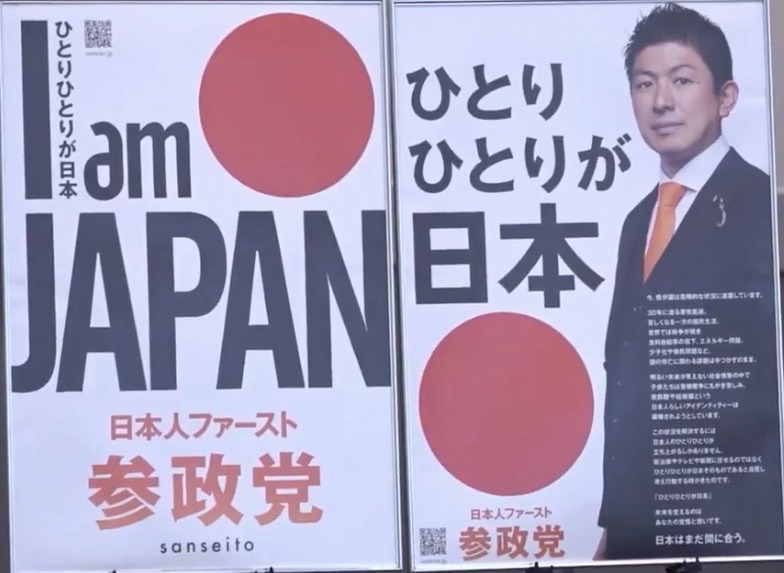
Supporters of Sanseito took to the streets of Kobe on Saturday 31st January 2026 to promote the party’s platform ahead of the upcoming election; as did the ‘Social Democratic Party’.
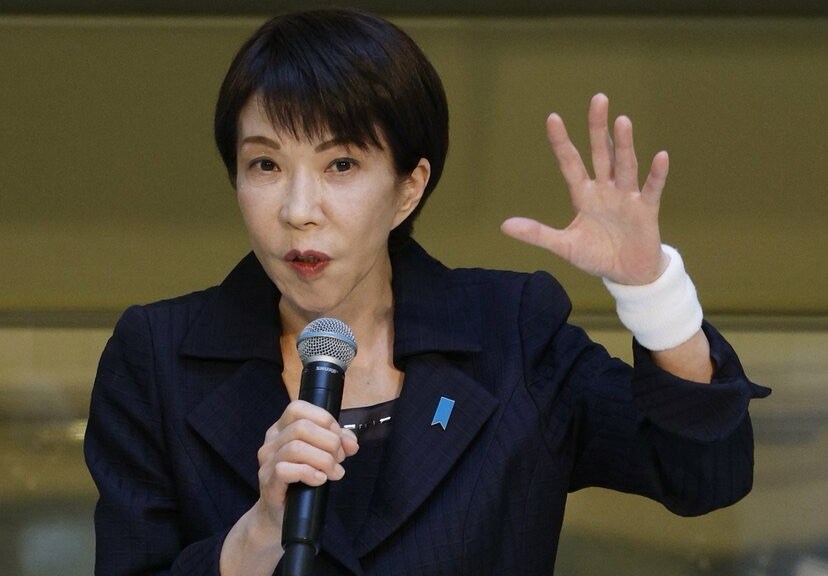
Japanese Prime Minister Sanae Takaichi canceled her appearance in a television debate program Sunday morning as she injured her hand during the campaign trail for the Feb. 8 general election. Takaichi posted on X, formerly Twitter, that she injured her hand during her campaign activities in the past couple of days and has been receiving treatment. “When I shook hands with a person who supports me enthusiastically, my hand was pulled hard and I hurt it,” she said, adding, “I have chronic rheumatoid arthritis, so my hand became swollen.”

Supporters of Sanseito took to the streets of Kobe on Saturday 31st January to promote the party’s platform ahead of an upcoming election.
Former internal affairs minister Sanae Takaichi won the ruling Liberal Democratic Party’s presidential election on Saturday in a runoff vote, defeating farm minister Shinjiro Koizumi.
Japanese Prime Minister Shigeru Ishiba on Sunday announced his resignation following his ruling Liberal Democratic Party’s major defeat in the July House of Councillors election. At a hastily called press conference, Ishiba said he has decided to resign as president of the LDP, meaning he will also step down as prime minister.
Japanese prefectural governors issued a declaration Thursday vowing to seek a multicultural society while rejecting exclusivism and xenophobia. The governors also called for nation-building efforts across party lines, noting that the people of the country need a long-term vision for the future. The declaration was adopted at a meeting of the National Governors’ Association in the northeastern city of Aomori, after the ruling Liberal Democratic Party-Komeito coalition lost its majority in the House of Councillors in Sunday’s election.
Sohei Kamiya, founder and prominent figure of the right-wing political party Sanseito, faced criticism from disability rights groups and medical experts in the lead up to the election after remarks made in a party-published booklet that denied the existence of developmental disabilities resurfaced.
Forty-two women were elected to the House of Councillors in Sunday’s election, hitting a record high for the upper chamber of Japan’s parliament. The number of female candidates reached 152, the second highest on record. Of them, 27.6 pct were elected, surpassing the success rate of 22.4 for male candidates. Women made up 33.6 pct of all elected candidates, exceeding 30 pct for the first time.
A group of people with intellectual disabilities in Japan has created and published an online dictionary for teaching others about election-related terms and the steps to vote. With Sunday’s election for the House of Councilors — the upper chamber of the Diet, the country’s parliament — drawing closer, in-person and online study sessions have been held using the dictionary. The 236-page “Senkyo no Kotoba” (terms of election) dictionary contains about 170 election-related terms, such as “the right to vote,” “candidate” and “democracy,” and the voting procedure is explained in hiragana letters in principle. The group of about 30 people, mostly users of Soshien, a social welfare organization for people with intellectual disabilities in the city of Higashiosaka in Osaka Prefecture, spent a year making the dictionary from April 2024.